The United States Department of Justice is prosecuting Atlanta resident and environmental activist Samuel Tunick for felony obstruction after he allegedly used a privacy feature on his smartphone to erase its data during a federal border search. Kyle Courtney, a law professor at Northeastern University in Boston, described it as “entirely unprecedented.”
Devin Savage
dnaofdisaster.com | August 2, 2026
I. The Counter
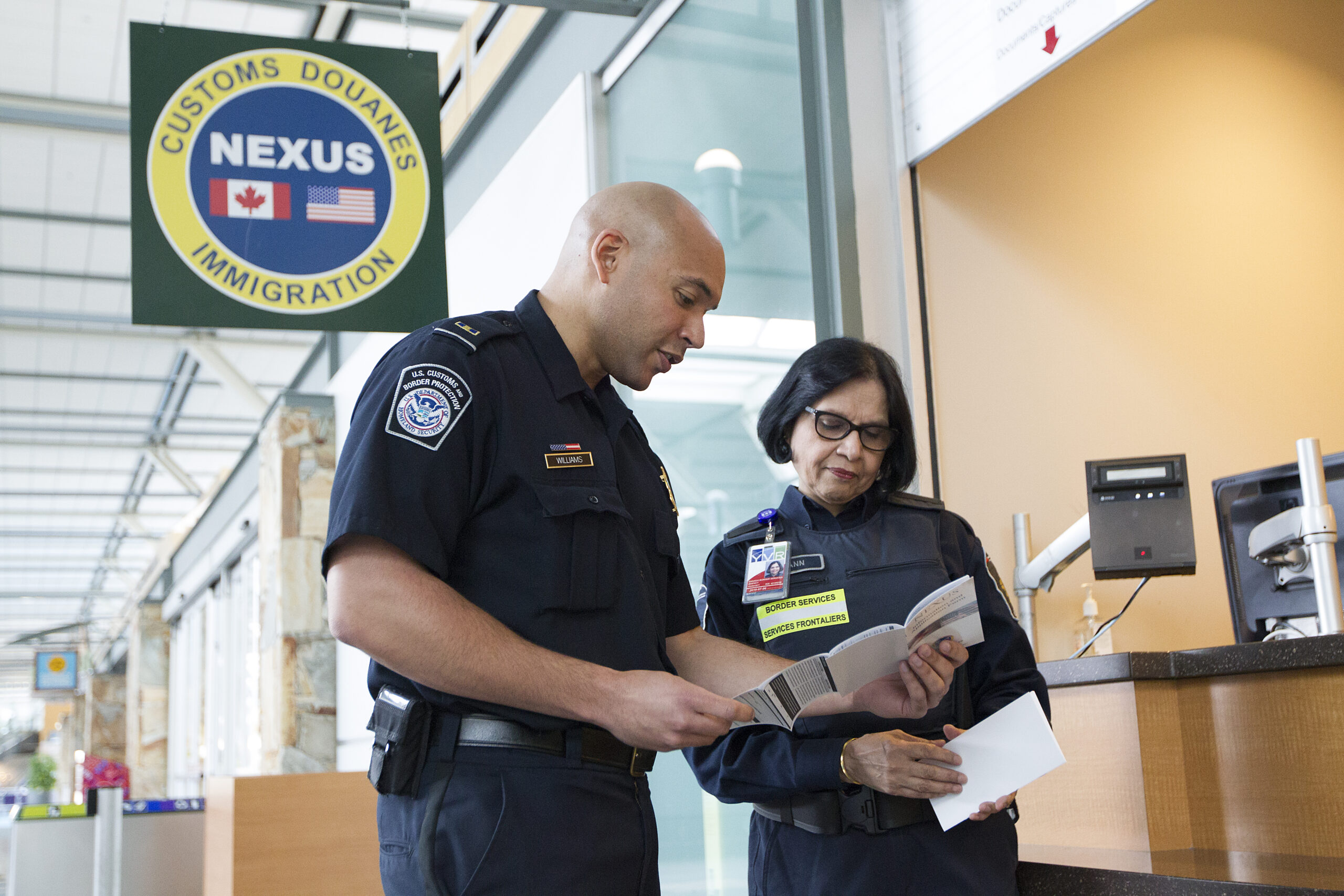
Samuel Tunick is an American citizen. He landed at Hartsfield-Jackson, on American soil, returning to his own country, and was pulled into secondary inspection — a routine act of federal discretion that required no reason at all. A Customs officer asked for his phone’s passcode. Tunick gave him one: a duress code, quietly built into his Google Pixel’s operating system, that wipes the device the moment it’s entered. The phone erased itself in the officer’s hands.
He is now facing a federal felony charge — up to five years — for destroying his own property, on the theory that the moment he touched down, that property briefly belonged to the Federal government too.
Sit with that for a second before reaching for the legal context. A citizen with no warrant against him, in his own country, at a counter staffed by We, the People, is being prosecuted for what he did with something he owns. There’s no traditional plot, the dialogue appears nonsensical and surrealism provides the backdrop. Yes, the absurdity is the story.
II. The Mechanism: Constructive Absence
Here is the pattern underneath it, and it deserves a name, because once you see it you’ll find it everywhere: constructive absence — a legal fiction in which a citizen’s location does not change, but the rights attached to that location quietly do.
At the border, the fiction is geographic. A body of case law treats the border, and places “functionally equivalent” to it — international airports, for instance — as existing partly outside the constitutional interior of the country, even when the citizen standing there never left it. The government’s interest in controlling entry is, in the courts’ own words, at its “zenith” in these places. Whatever that zenith buys the state, it costs the citizen: a Customs officer can refer any traveller, American or not, to secondary inspection with no suspicion whatsoever, and can manually search a phone or laptop on the same basis. No reason required. No explanation owed.
With ICE, the fiction is jurisdictional rather than geographic. An agency built for immigration enforcement now operates with wide discretion in spaces that feel, to an ordinary citizen, like the most unremarkable parts of civic life — a street corner, a workplace, a courthouse hallway, a school. Citizens have at least a vernacular understanding of their rights in an encounter with local police: the right to remain silent, the Miranda script drilled into them by decades of television dramas. There is no equivalent folk knowledge for an ICE encounter, because the shape of that encounter — who gets stopped, on what basis, with what recourse — has never stayed still long enough for the public to learn how to deal with it — to digest into street smarts. (See my blog post on this topic.)
Different mechanisms. Same output: the citizen hasn’t moved, but the map moved under them.
III. The Extended Mind
Before moving to the political architecture, it’s worth pausing on what, specifically, is being seized. A phone is not luggage. It is closer to what philosophers of mind call an “extended mind” — a cognitive prosthetic, not a possession: the outsourced memory of every conversation, the running record of where you went and who you called, the search history that maps the shape of your private curiosity better than any diary ever could. Take it away and you haven’t confiscated any ordinary contraband. You’ve confiscated a working extension of someone’s own head. Search it by force, and you’ve paved the way to an Orwellian superstate — one festooned with 1984’s thought police.
The Supreme Court came close to this exact intuition in Riley v. California (2014), even while ruling on a narrower question — a warrantless phone search following an arrest. Chief Justice Roberts wrote that modern phones are so woven into daily existence that a visitor from Mars might mistake them for an organ of human anatomy. The Court’s deeper point was structural, not rhetorical: a phone isn’t a container holding a person’s effects, the way a wallet or a suitcase is. It is closer to an appendage that happens to hold the effects themselves — thought made retrievable.
Seen this way, handing a phone to a Customs officer isn’t equivalent to opening a bag for inspection. It’s closer to being asked to open your own skull. That reframes the entire border-search doctrine’s founding assumption — that a phone is just another item crossing a checkpoint, subject to the same low-friction rules as a suitcase — as a category error dressed up as settled law. This event should reveal that the assumption that a smartphone is equivalent to a suitcase is anything but established case law.
IV. The Human Folly: The Myth of Portable Rights
The folly (Human Folly #3, Trojan Horse) that lets this architecture function applies to the public- to the American citizenry, and it’s a comforting one. Most Americans carry an assumption that “constitutional rights” is a single, uniform status, issued once at birth and portable everywhere within the country’s borders. It isn’t. It is a patchwork, riddled with these zones of reduced protection, and the overwhelming majority of citizens discover a given hole only by falling into it.
This is a close cousin of a folly that shows up whenever a system’s real architecture is more fragmented than its public story: people prefer the simple, unified narrative to the accurate, complicated one, right up until the complicated one lands on them personally. Tunick almost certainly believed, like most of us, that “American citizen returning home” was a single, stable legal status. It may have been at one time, but now, it is not. It is a status with an asterisk that only becomes legible at the immigration counter or on the street at an ICE protest.
V. The Veto Node With No Accountability
This is the sharpest point in the machine, and it is not a matter of interpretation — it’s simply how the rules are written.
A Veto Node, in any designed system, is a point where a single actor’s discretion can halt or redirect the process. Well-designed human systems put a counterweight on every Veto Node that matters: a second signature, a documented standard, a warrant, an audit trail. It’s what keeps discretion from curdling into arbitrariness.
At the border, the counterweight has been engineered out of the first tier of search entirely. CBP’s own policy distinguishes a “basic” search — manual, on the spot, requiring no suspicion at all — from an “advanced” forensic search, which does require reasonable suspicion and a supervisor’s sign-off. Tunick was never subjected to an advanced search. He faced the low tier, the one with no counterweight, the one any officer can invoke on a whim.
With ICE, the counterweight is thinner still. Individualised, documented cause is not consistently required for many street-level encounters, and the agency’s manpower numbers and operational priorities have shifted with the political weather of successive administrations — to the point that even the agents making a given stop may not be able to articulate, in any durable sense, “why you.” A Veto Node with no counterweight isn’t an oversight. It’s a design choice, and it’s worth asking who benefits from that choice remaining in place.
VI. Fairly Stated: The Government’s Case
A framework earns its credibility by giving the other side real weight, so here it is, without a thumb on the scale.
United States v. Flores-Montano (2004). The Supreme Court held that the government’s interest in protecting the border is at its “zenith” when it comes to preventing the entry of unwanted people or goods — the case involved a vehicle’s fuel tank being disassembled without any suspicion at all, and the Court found that entirely reasonable. This is decades old case law, upheld across administrations of both parties, and it reflects a genuine, distinct government function: nobody seriously disputes that a country gets to control what and who crosses its threshold.
United States v. Cotterman (2013). The Ninth Circuit pumped the brakes on how far that zenith reaches into digital devices, ruling that a forensic examination of a traveller’s laptop — as opposed to a quick manual look — is invasive enough that it requires reasonable suspicion, not just border-crossing status. It’s the clearest judicial acknowledgment that a phone is not a suitcase: the sheer density of a life recorded on a modern device changes the constitutional calculus, even at the border.
Put those two together and you get the honest, unflattering truth: the legal architecture behind Tunick’s ordeal predates the current political moment by twenty years, and courts across the ideological spectrum have built and sustained it. But there’s a mirror-image case worth setting against all three, and it’s where the framework’s real tension lives. In Boumediene v. Bush (2008), the government argued that detainees held at Guantánamo Bay were beyond the reach of the writ of habeas corpus precisely because they sat outside U.S. sovereign territory. The Supreme Court rejected that argument, holding that constitutional protection follows the government’s functional control over a person, not the flag flying over the ground beneath them. Distance from the homeland did not put those detainees beyond the Constitution’s reach.
Hold that against Tunick, who arrived back in his homeland after a vacation in the Dominican Republic. The writ travelled outward to find people the government tried to keep beyond its border. And yet a citizen standing inside that same border, under that same government’s control, can be stripped of ordinary protection simply by being told which side of an administrative line he currently occupies. Presence bought him less than absence bought a Guantánamo detainee. That asymmetry is the whole essay in miniature —and it is precisely where the Tunick case belongs.
VII. Where the Design Actually Fails: Proportionality
Here is the detail that turns this from a civil-liberties grievance into a design failure, in the strictest sense of the term.
CBP’s own written policy instructs officers not to reach into a traveller’s cloud data during a device search — agents are told to put the phone in airplane mode specifically to keep the search confined to what’s stored locally, because pulling cloud data requires the higher-friction path: a warrant. That is the government’s own admission that the local device and the cloud account are different legal objects, protected by different levels of process.
Which means Tunick’s duress wipe did not defeat the investigation. It deleted the low-friction copy and left the high-friction copy — the one requiring a warrant — fully intact and reachable exactly as the law intends. He is facing five years in prison for forcing the government to use the process it was supposed to use for that data in the first place. Let’s agree, at the minimum, that this minor, low-level, first tier misdemeanor is no obstruction of justice in any meaningful sense. It’s a citizen accidentally exposing where the design shortcut lived, and that same unlucky citizen is now being punished for the exposure rather than the shortcut being examined.

Image by ChatGPT, 2026
VIII. The Big Question
Habeas corpus means, literally, “you shall have the body.” Courts have ruled that the writ can travel outward to reach a detainee thousands of miles beyond the border, wherever the government’s control actually extends. And yet a citizen’s own body, standing inside his own country, can be stripped of ordinary protection by that same government simply by being told which side of an administrative line he’s currently on. If the writ can reach outward to find control, why does a citizen’s own protection recede the moment he’s standing at home?
IX. Discussion
Prosecutors treated the deletion of encrypted data as the destruction of property to prevent lawful seizure, even though the physical phone remained in their custody and the wipe was a built‑in privacy feature designed precisely for coercive contexts. In effect, the border inspection zone operates as a digital analogue to Guantanamo: a space where the state asserts near‑total control over the body and the device, while normal constraints on search and seizure are suspended or radically attenuated. A case dating from 2004 laid the groundwork for the landmark Boumadiene (2008) ruling. In Rasul v. Bush (2004), the Court held that the federal habeas statute (28 U.S.C. § 2241) gave federal courts jurisdiction to hear petitions from foreign nationals detained at Guantánamo, because the U.S. exercised “complete jurisdiction and control” over the base even though it lacked formal sovereignty. The SCOTUS was clearly chipping away at the fiction of ‘holes in the flooring’ of constitutional rights that allow unwitting citizens and non-citizens alike to fall through. The government’s actions beggars the question: would Tumick fare better if he were a foreign detainee?
X. Closing Statement
There is no tidy fix offered here, and there shouldn’t be — that’s not the DNA of Disaster’s job. I can only show how the framework should be applied to reveal the underlying machinery with some clarity. What matters is naming the pattern clearly enough that it can be recognised the next time it appears, because it will appear again, in a new zone, under a new justification, dressed in the same reasonable-sounding language about zeniths and national interests. These zones don’t announce themselves when you enter them. Most citizens learn the borders of their own rights only retroactively — in a courtroom, in an indictment, in the quiet, irreversible moment a phone goes dark in an officer’s hand. Those who are shot on the street by ICE may never learn where those borders actually lie.
Sincerely,
Devin Savage
Tübingen, Germany & Dublin, Ireland
Research assistance using Claude.ai and Google’s Gemini and a bit of spot-checking with Perplexity. Image generated with ChatGPT.
—
Notes:
I have no expertise in the law, therefore I must rely on secondary sources for what these cases actually mean. So I could be wrong. If you have expertise in legal matters and you spot an error, feel free to send in a comment.
Constructive presence and constructive absence are legal and political concepts where a status is legally assigned to a situation even if it differs from physical reality. Constructive presence means being legally treated as “present” despite being physically away, while constructive absence means being intentionally stepped away or non-engaged in a manner that legally or procedurally permits a group to bypass a block (such as a unanimity requirement). I use this term to describe situations when the Constitutional protections are “designed to be absent” as opposed to “present by default” which is the assumption that most American citizens carry regarding their Constitutional rights. -DS