Thursday, Jan 22, 2026
By Devin Savage
On 16th March 2003, Vice President Dick Cheney appeared on MEET THE PRESS with Tim Russert and declared: “My belief is we will, in fact, be greeted as liberators.”
I started my deep dive into the “Russkiy Mir,” a term I would describe as the “Russian Sphere of Influence” on 24th February 2023, exactly one year after Russia’s invasion of Ukraine. An article in the Financial Times had caught my interest- it was published on the 23rd of February, 2023 entitled: “How Putin blundered into Ukraine — then doubled down,” outlined the decision to invade Ukraine—a decision not revealed until Putin gave the order at 1 AM on 24th February 2022. Putin had a habit of consulting only a small handful of close confidants when making major policy decisions, and this modus operandi wasn’t broken by the present decision to pull the trigger and roll Russian troops across Ukraine’s border.
When one of the oligarchs pressed Russian Foreign Minister Sergey Lavrov for an explanation of why Putin had decided to invade after consulting only a small handful of advisers, according to the oligarch, Lavrov replied: “He has three advisers: Ivan the Terrible, Peter the Great, and Catherine the Great.”
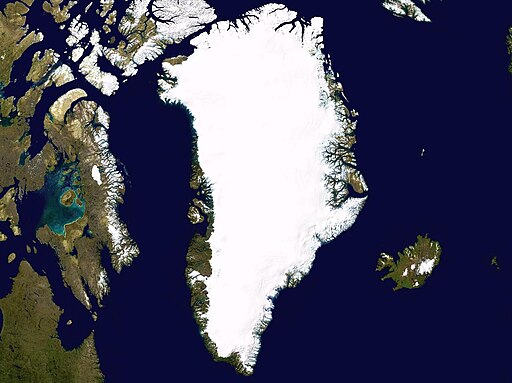
Now, in January 2026, we’re watching another leader make territorial claims that echo imperial ambitions from centuries past. Donald Trump’s repeated statements about acquiring Greenland—ranging from purchase offers to refusing to rule out military force, just before he ruled out military force at Davos—invite comparison to Vladimir Putin’s 2014 annexation of Crimea. But the comparison reveals something far more interesting than simple parallel: it exposes the fundamental constraints that shape how leaders attempt to build their legacies, and why those constraints matter more than raw military power.
The American Founders Built Legacies, but not Monuments to Themselves
To understand what makes Trump’s approach to legacy-building so distinctive, we need to look at how the American founding generation thought about permanence and remembrance. It is fascinating to compare the Founders to modern figures like Donald Trump, because their approaches to legacy were almost diametrically opposed in style, yet equally intense in ambition.
The Founding generation was obsessed with legacy, but they viewed it through the lens of “Classical Virtue.” To them, putting your own name on a building whilst you were still alive was considered “vile” or “monarchical”—the mark of a tyrant rather than a citizen.
Thomas Jefferson (The Architect): Jefferson was perhaps the most ambitious legacy builder, but he did it through style. He loathed British architecture and wanted to “build” the character of the new republic using Greco-Roman designs. He designed the Virginia State Capitol and Monticello to project the permanence and dignity of a New Rome. He didn’t put his name on them; he put his ideas into the stone.
George Washington (The American Cincinnatus): Washington’s legacy was built on renunciation. By stepping down from power twice, he created a “monument” of precedent. He set the example of sharing power and public service that echoes down through the ages- a standard for all who follow. He was so wary of self-glorification that he initially resisted efforts to build a monument to him in Washington, and the Washington Monument wasn’t actually completed until nearly a century after his death.
The “Anonymous” Tradition: Many of the most important works of that era (like The Federalist Papers) were published under pseudonyms like “Publius.” The idea was that the argument should matter more than the man.
Trump represents a radical departure from this tradition. His style is Personal Branding as legacy-building. Whilst the Founders built temples to ideas, Trump builds monuments to the self. (Himself.) Trump Tower, Trump International Hotel, the Trump Kennedy Center—these represent what historians call an “Edifice Complex,” a psychological drive to build massive, permanent structures to prove one’s importance or power. In the 18th century, this would have been seen as “ostentation,” a word they used to describe someone who used wealth to bypass social or political standing. (See Gerard Lico’s book “Edifice Complex“, 2003)
Interestingly, Trump has proposed building a Triumphal Arch in Washington. This is a very Roman concept—like the Arch of Constantine, Rome’s largest surviving triumphal arch. Whilst Napoleon and Roman Emperors loved them, the Founders specifically avoided structures which celebrated a single “Hero of the Republic” rather than the “We the People” philosophy of the democratic experiment.
Putin’s Patient Preparation: The Crimean Template
Vladimir Putin’s approach to Crimea represents the opposite of Trump’s edifice complex—it was methodical, invisible, and brutally patient. To understand Putin’s Greenland parallel, we need to examine how thoroughly he prepared the ground before Russian troops ever appeared in Crimea.
Fertile Ground for Takeover, by Design
According to Chatham House, a UK think tank, Crimea was at the dawn of its history a Greek land. Through the course of history, several powers sought to dominate Crimea, including Russia. It was a multicultural protectorate of the Ottoman Empire for over 300 years. Russia invaded Crimea in 1783, and over the next centuries the Crimean demographics changed sharply with forced outward migrations of the Crimean Tatars and an influx of ethnic Russians. Imperial Russia’s policy of expelling native populations and annexing their lands ultimately resulted in a 2001 census showing 60 per cent consisting of ethnic Russians, 24 per cent Ukrainians, and just 10 per cent Crimean Tatars.
Putin’s preparation for Crimea began almost immediately after he took power:
2003: Putin gave the order to begin construction of a dam in the Kerch Strait extending to Tuzla Island. The stated purpose of the dam was to stave off erosion in the area, but Ukraine accused Russia of attempting to annex the island.
2008: According to an article in The Guardian from September of that year, Moscow was suspected of distributing Russian passports to ethnic Russians in Crimea, who at the time made up more than 50 per cent of the population of 2 million inhabitants.
2010: Viktor Yanukovych extended the lease on Russia’s Black Sea Fleet at Sevastopol until 2042, in exchange for a 30 per cent discount on natural gas prices. Viktor Yushchenko, Yanukovych’s pro-Western predecessor, said of the agreements: “If society today turns a blind eye to the Kharkiv agreement, it is possible that it will be the biggest loss to our sovereignty and independence.”
2014: Armed undercover Russian soldiers and pro-Kremlin protesters occupied key checkpoints and administrative facilities in Crimea. By March, it had been illegally annexed by Russia.
The timeline reveals Putin’s strategic patience: eleven years from the Tuzla dam to annexation. During that time, he systematically:
-Altered demographics and identities through passport distribution
-Created economic dependency through energy pricing and dependence
-Secured military assets through lease extensions
–Built a narrative of “protecting” Russian speakers
-Tested Western resolve with incremental provocations- Kaizen style
The Western response to the 2014 annexation was feeble at best. The EU limited its response to economic restrictions on Crimea including an import ban on goods, an export ban for certain items and technologies, and restrictions on trade, tourism, and investment. This was, in effect, a green light to Putin’s designs on Ukraine. Test the concept in Crimea, then go for the whole country.
Trump’s Impatient Approach: The Greenland Problem
Now compare Putin’s eleven-year preparation to Trump’s approach to Greenland. Since his first term, Trump has publicly floated the idea of purchasing Greenland, been rebuffed by Denmark and Greenland’s government, and recently refused to rule out using military or economic force to acquire it, but then ruled out military force at Davos.
What Trump COULD have done (following the Putin playbook):
Quietly increase US military presence at Thule Air Base
Offer massive infrastructure investment to Greenland (roads, hospitals, internet connectivity)
Create economic dependencies making Greenland reliant on US support
Wait 10-15 years whilst Greenlanders become accustomed to US benefits
Engineer a “voluntary” association referendum
What Trump IS doing:
-Public declarations of intent to purchase or take Greenland
-Threats about tariffs on Denmark and other EU countries
-Zero preparation, zero groundwork, zero demographic engineering
-Expecting the military to be available as a tool if diplomacy fails
-Everything the opposite of Kaizen
The contrast couldn’t be starker. Where Putin worked in shadows for over a decade, Trump announced his intentions on Twitter. Where Putin created conditions that made annexation seem inevitable to locals, Trump is generating opposition and unity amongst Danes and Greenlanders alike, and general animosity within the EU. All before giving any kind of military orders for any kind of ‘invasion’.
The Asymmetry That Explains Everything
Here’s the fundamental paradox: Putin has had almost unlimited time but limited military capability. Trump has unlimited military capability but limited time.
Putin’s Constraints:
-Has been in power for 25+ years with no term limits
-Can plan across decades
BUT: His military has proven a bit hollow—couldn’t take Kyiv in 72 hours, grinding meat-grinder attritional warfare in Ukraine, relying on North Korean munitions and Iranian drones with Chinese and Western parts
-His “soft arm” forces him to be patient and subtle
Trump’s Constraints:
-Four years maximum (even if he breaks norms, still finite)
-The world’s most powerful military—no question about capability
-Zero patience, zero subtlety, zero strategic preparation
-His entire brand has always been about SPEED and SPECTACLLE (Trump Tower goes up fast, name goes on in gold immediately)
As Fiona Hill recently noted on David Frum’s podcast, Trump is obsessed with his Nobel Prize legacy. But here’s the critical difference: Putin’s ambitions are about historical restoration (reconstituting the Russian empire, the concept of “Russkiy Mir”). Trump’s ambitions are about personal branding (his name, his deals, his towers).
Putin sees himself as continuing a centuries-long Russian narrative. Trump sees himself as THE narrative.
Trump: An Accident of History
Trump’s position is further complicated by how he arrived at power. He is, in a very real sense, an accidental legacy builder. He stumbled into the presidency through:
Electoral College design (geographic vote weighting that allowed him to win whilst losing the popular vote)
The four-year intermission (2020-2024) that allowed Project 2025 planning
A second term that feels unearned in the sense that he lost the popular vote twice, yet still became POTUS twice- even as a convicted felon.
Unlike Putin, who methodically climbed the KGB/FSB ladder and was groomed for power, Trump’s path was chaotic. This creates a different psychological urgency—he knows his time is limited and possibly illegitimate in the eyes of many Americans. He needs his legacy monuments NOW because he’s 78 years old and has four years maximum.
Why Greenland Isn’t Crimea
The deeper strategic problem Trump faces is that a strong military doesn’t help you ACQUIRE territory in the modern era—it only helps you HOLD it after you’ve acquired it through other means.
Putin understood this in terms of Crimea. The military was for securing Crimea AFTER the political, demographic, and economic groundwork was laid. The 2014 annexation was nearly bloodless because the preparation was so thorough. Now I am not saying Putin did everything correctly (from his standpoint) with Crimea- but he did design it relatively well- especially in comparison to how he approached the invasion of Ukraine as a whole in 2022.
But Trump, in comparison, seems to think the military is like a business acquisition team—you point it at what you want and take it. No real prep work needed outside of military planning. However:
-Invading Greenland would shatter NATO (Article 5 protects Denmark)
-It would be catastrophic for US global standing
-It would make every US ally question their security relationship with the USA
-It would hand China and Russia a massive propaganda opportunity
-It would potentially unite European nations against the United States
Trump has correctly identified that Greenland has strategic value:
Controls Arctic sea routes (increasingly navigable due to climate change)
Strategic position between North America and Europe
Rare earth minerals (though accessibility and extraction costs remain questionable)
The GIUK gap (Greenland-Iceland-UK) is crucial for naval positioning
He’s also correctly identified European weakness—decades of underinvestment in defence, reliance on US security guarantees, internal political divisions. The destabilising effect of massive immigration from outside the EU and the rise of the new populist right- Meloni, AfD, and the reinvention of Le Pen’s far-right party in France into a National Identity archetype.
But knowing what you want and having the military power to take it doesn’t mean you CAN take it—not in a world where legitimacy, alliance structures, and democratic norms still matter. Trump took apart the Republican party and reassembled it in his own image. This won’t work on the international stage. This is due to the very nature of populist ‘identity’ politics.
The China Factor
There’s another dimension to consider: China’s global port strategy. With almost 100 ports worldwide under Chinese control—some owned outright, others on 99-year leases—China is building what amounts to a global shipping empire analogous to Amazon Prime’s control of logistics. China wants to own the supply chain from minerals to ports and everything in between.
Trump may be reacting to this strategic threat. But his approach—public bluster, off-the-cuff threats, zero preparation—tells China exactly what he values before he has any leverage. Putin’s approach kept everyone guessing until Russian troops were already in Crimea. Trump’s approach tells everyone exactly what he wants before he has positioned himself to acquire it.
The Monument Builder’s Paradox
We can now state the fundamental contradiction clearly:
Successful territorial acquisition in the modern era requires EITHER:
Long-term patience (Putin’s model—years of preparation, demographic engineering, economic dependency), OR
Overwhelming legitimacy (post-WWII US hegemony, where American presence was welcomed as liberation from fascism)
Trump has neither. He has:
-Power without patience
-Force without legitimacy
-Ambition without preparation
–Brand recognition without institutional trust
This makes him dangerous in unpredictable ways—leaders with overwhelming force and limited time can lash out—but also less likely to succeed in territorial acquisition than Putin was with Crimea.
Putin could afford to wait because he’s building legacies that will outlast him—”Holy Rus'” is a thousand-year concept, the restoration of the “East Slavic Triangle” of Russia, Ukraine, and Belarus is about historical continuity.
Trump needs his legacy monuments NOW. And that urgency—that four-year window, that 79-year-old body, that hunger for a Nobel Prize and his name on history—creates a completely different strategic calculus.
It’s Not Just What You Do, It’s How You Do It
In the end, the Greenland-Crimea comparison reveals something profound about power in the modern world. Dick Cheney believed Americans would be “greeted as liberators” in Iraq. (Did he truly believe, or was it a hope?) Putin believed Ukrainians would accept Russian dominance of the “Russian World.” Trump may believe Greenlanders will welcome American investment and strategic protection.
But belief doesn’t make it so. The Founders understood that legacy isn’t claimed—it’s earned through service, through precedent, through putting ideas into stone rather than names onto buildings.
Putin understood that territorial acquisition requires years of preparation, creating conditions where annexation seems inevitable rather than imposed.
Trump appears to understand neither principle. He has the world’s most powerful military, but military power is the WRONG tool for acquiring territory in an era where democratic norms and alliance structures still constrain naked aggression—even from superpowers. Build with invitation, not force.
The paradox is complete: The leader with unlimited time has limited military capability. The leader with unlimited military capability has limited time. And neither can build the empires they envision, because both have fundamentally misunderstood the constraints of the modern world.
The American Founders built legacies through restraint and principle. Putin annexed Crimea through cunning, patience and subtlety. Trump is trying to build Greenland through brute force and branding.
Recent history suggests Trump’s approach won’t work.
Kind Regards,
Devin Savage
Tübingen
Research assistance using Claude.ai and Google’s Gemini.